
From LinkedIn visibility to real donations: the nonprofit funnel most charities get wrong
Did you know 56% of LinkedIn users are more likely to donate to nonprofits compared to the average internet user? It’s a pretty powerful tool for nonprofits
But if you’re thinking, “Okay… but that hasn’t really been my experience,” you’re not alone.
Maybe you’re posting consistently, and you’re even getting likes and comments. On the surface, it feels like things are working.
But when it comes to real support and deeper involvement, the results just aren’t showing up the way you expected.
The truth is, a lot of nonprofits are active on LinkedIn, but not necessarily using it in a way that actually converts LinkedIn followers to donors.
That’s exactly where having a clear LinkedIn strategy makes all the difference.
LinkedIn visibility is only the starting point
Posting every day and seeing strong engagement is amazing! But LinkedIn visibility alone doesn’t automatically lead to donations.
Most potential donors need a deeper context before they trust you enough to take action.
And visibility that leads to conversions takes more than just “posting and ghosting.” It comes from consistently adding value to the platform and building trust with your audience over time.
This can look like:
Sharing other people’s posts that align with your mission
Joining conversations related to your work
Personally messaging people to start meaningful conversations
Staying consistent with your personal brand and message
Over time, you won’t just become more visible. You’ll create more opportunities for real relationships and real donations.
The mistake most nonprofits make on LinkedIn
You might think, “If I want more donations, I should create more posts asking people to give, right?”
At first, that seems logical. But in reality, not every post should be a direct ask. Don’t waste time throwing darts and hoping one lands.
There’s a better approach.
Every piece of content has a different purpose and speaks to people at different stages of their relationship with your organisation.
Some posts build awareness. Some build trust. Others highlight impact or tell meaningful stories. And yes, some are designed to invite people to take action.
When you understand the role each type of content plays, you can create a clearer path from first impression to lasting partnership.
So, what does that actually look like in practice?
Let’s break down how to convert LinkedIn followers to donors using a LinkedIn funnel that encourages meaningful support over time.
How to build a simple LinkedIn donor funnel
Here’s a simple framework to help move people from simply seeing your content to actively supporting your mission:
1. Awareness: help people understand the problem
First impressions matter. This stage sparks curiosity about who you are, what you do, and why your mission matters.
People are naturally drawn to solving problems, but before someone feels motivated to help, they need to understand what the problem actually is.
Your content should clearly communicate the need you’re addressing and the unique value your organisation brings in helping solve it.
Here are some LinkedIn content ideas for awareness:
Share an article, video, or surprising statistics related to your cause
Tell short stories that highlight the real-life problem your organisation is addressing
Share founder stories or personal reflections on why your mission matters
Comment on current events or news stories connected to your mission
2. Trust: show the people and work behind the mission
67% of volunteers say they chose to support an organisation because they had a strong belief in its mission.
Before someone becomes an active champion for your cause, they need to trust you and believe in what you’re doing.
If you want to build LinkedIn donor engagement, you have to consistently show the “why” behind your mission.
People want to understand:
Why your work matters
How your organisation is making a difference
Where their support actually goes
Why their involvement is needed
Remember, this is a long game. Trust is often built slowly over time through multiple touchpoints, both on and off LinkedIn.
The key is to keep showing up intentionally and stay consistent with your message and values.
Here are some LinkedIn content ideas to build trust:
Behind-the-scenes content showing how a programme actually runs
Start a LinkedIn newsletter that shares monthly stories or guest contributions
Short video testimonials from people impacted by your work
A founder or leader post sharing why this mission personally matters
A gratitude post highlighting donors or volunteers and what they helped make possible
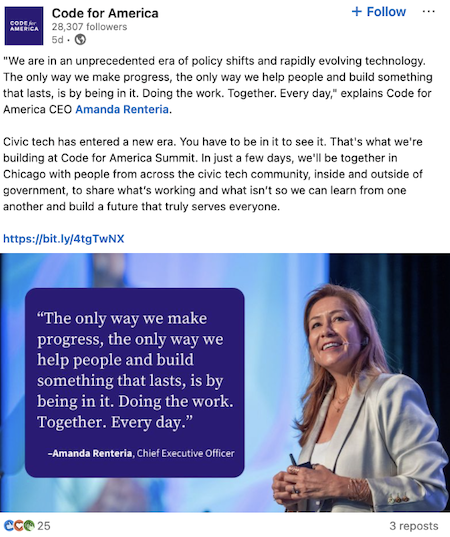
Check out this example of a nonprofit sharing awareness through an inspiring quote from their CEO:
3. Engagement: invite small actions first
This is the stage where you’re actively engaging with your audience and inviting them to take the next step in supporting your mission.
At this point, people are familiar with your organisation. They trust your content and are beginning to warm up to the idea of getting involved.
But it’s important not to rush the process. The goal here isn’t a big ask right away. It’s about inviting small actions with a low barrier to entry.
Take a look at these LinkedIn content ideas to boost engagement:
Post invitations to upcoming events or webinars with a clear, low-pressure call to join
Create interactive posts (polls, questions, or scenarios tied to your mission)
Post short updates that link back to your website (“Read the full story,” “See the impact,” etc.)
Invite people to take one small step (“Follow along,” “Join our email list”)
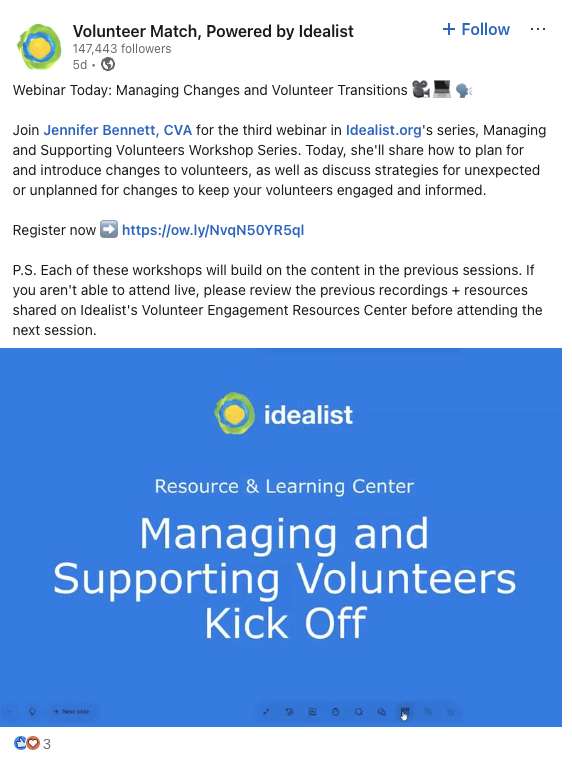
For example, this nonprofit used LinkedIn to invite engagement by promoting an upcoming webinar:
4. Conversion: make the donation step clear and easy
This is the stage where people already believe in your mission and are ready to take action by making a donation.
Now, your job is to make the giving step as clear and friction-free as possible.
You don’t need to be pushy, but you also don’t want potential donors wondering how to give or what to do next. A simple and direct call to action goes a long way.
Some LinkedIn content ideas to promote conversion:
Share “choose your impact” style posts (e.g., “$25 provides X, $50 provides Y”)
Highlight tangible ways to get involved for the first time (e.g., “3 ways you can support this month”)
Post short video appeals from staff, leaders, or beneficiaries
Share campaign progress updates or milestone posts (“We’re 80% there!”)
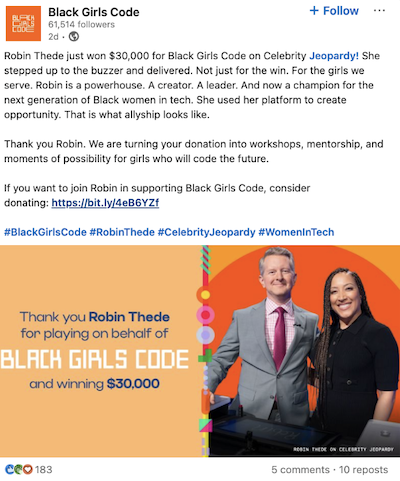
Here’s an example of a LinkedIn post where a nonprofit encouraged giving by sharing the story of one of their donors:
Don’t forget the journey after the click
Your donors are ready to give. You’ve made it…but have you?
Just because someone clicked your donation link doesn’t always mean they’ll follow through. A confusing or frustrating giving experience can still lead to drop-off at the last minute.
That’s why donor stewardship matters just as much as the content that brought people there in the first place.
Here’s a quick checklist to help create a smooth donor experience from click to donation:
A clear donation page that matches the message from your LinkedIn post
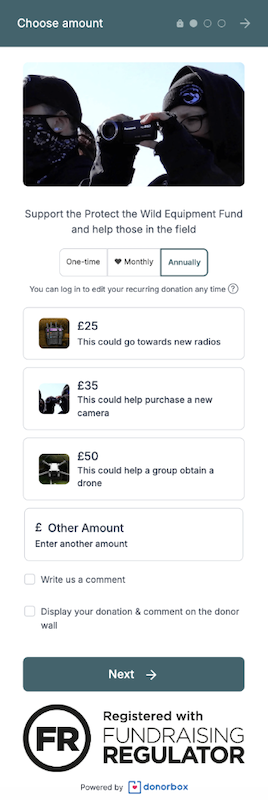
Suggested giving amounts to help donors get started
Easy-to-find recurring giving options
Simple explanations showing the impact of each donation amount
A mobile-friendly donation experience
A short, easy donation form without unnecessary steps
A personalised thank-you message or follow-up email
The truth is, you’ll probably need a giving tool here to make the donor experience really smooth.
Platforms like Donorbox help you create customizable donation forms and even send automatic thank-you messages.
Here’s an example of a Donorbox donation form that clearly highlights the impact of each giving amount:
Remember, many giving opportunities happen naturally through consistent visibility and genuine conversations. And often, they come from conversations and relationships you never expected!
Need more help using LinkedIn? I’d be happy to connect and set up a training session to help you get started.